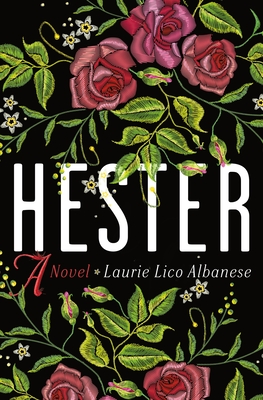
 Hester by Laurie Lico Albanese
 Published by St. Martin's Publishing Group on October 4, 2022
Genres: Fiction / Historical / General, Fiction / Literary, Fiction / Women
Pages: 336
Format: Audiobook
Amazon|Barnes&Noble|Goodreads
Named a Most Anticipated Book for Fall 2022 by Goodreads • Washington Post • New York Post • BuzzFeed • PopSugar • Business Insider • An October 2022 Indie Next List Pick • An October 2022 LibraryReads Pick
"A hauntingly beautiful––and imagined––origin story to The Scarlet Letter." ––People
WHO IS THE REAL HESTER PRYNNE?
Isobel Gamble is a young seamstress carrying generations of secrets when she sets sail from Scotland in the early 1800s with her husband, Edward. An apothecary who has fallen under the spell of opium, his pile of debts have forced them to flee Glasgow for a fresh start in the New World. But only days after they've arrived in Salem, Edward abruptly joins a departing ship as a medic––leaving Isobel penniless and alone in a strange country, forced to make her way by any means possible.
When she meets a young Nathaniel Hawthorne, the two are instantly drawn to each other: he is a man haunted by his ancestors, who sent innocent women to the gallows––while she is an unusually gifted needleworker, troubled by her own strange talents. As the weeks pass and Edward's safe return grows increasingly unlikely, Nathaniel and Isobel grow closer and closer. Together, they are a muse and a dark storyteller; the enchanter and the enchanted. But which is which?
In this sensuous and hypnotizing tale, a young immigrant woman grapples with our country's complicated past, and learns that America's ideas of freedom and liberty often fall short of their promise. Interwoven with Isobel and Nathaniel's story is a vivid interrogation of who gets to be a "real" American in the first half of the 19th century, a depiction of the early days of the Underground Railroad in New England, and atmospheric interstitials that capture the long history of "unusual" women being accused of witchcraft. Meticulously researched yet evocatively imagined, Laurie Lico Albanese's Hester is a timeless tale of art, ambition, and desire that examines the roots of female creative power and the men who try to shut it down.
This is the book that started my journey down memory lane, caused me to bookmark some things I read back in the late 1900s in school, and listen to The Scarlet Letter. You know, since that was the inspiration for Hester. And for this book, I don’t really have thoughts. I didn’t love it, but I also didn’t not like it. Hawthorne is featured, kind of as a jerk, but ya know. We see a lot more about witches woven in along with slavery of the time. There are also the themes of empowerment of women, judgment, guilt, and fear woven in. And needlework- can’t forget the importance of needlework. But there’s not a single character named Hester.
While no Hester, there is a multitude of characters, which was a struggle for me. Trying to keep them all straight and their value. While I have no names I can remember, there are impressions of their importance to Isobel’s story. What was interesting was Isobel’s synesthesia. I Googled for all of us, and ultimately Isobel hears colors. There are other variations, but this is the one we are working with. Words and letters have color for her, and that color has meaning. As a descendant of a Scottish ‘witch’ now living in Puritan Salem, that color is just a target to be labeled a witch, so of course it’s been hidden her entire life. It added a touch of intrigue to the story, but it also sometimes felt like it took over the story. At this point I’m struggling with character and color overload. But there’s good things too.
The story flows; while it’s methodical and not quick, there’s a lyrical quality to it. Perhaps because I listened to the audiobook instead of reading it, I felt carried by the story. The talk of witches, the historical flashbacks to Scotland. The talk of escaped slaves and those born free. The missing wretch of a husband. The child born without an identified father. The community that grows outside the greater community and women supporting women. Much easier to read than The Scarlet Letter; it’s a really great accompaniment. I appreciated the story, well woven without all. the. words. I didn’t really love it, but I did like it more than a little bit.

About Laurie Lico Albanese
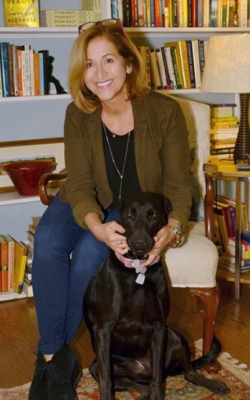
Welcome to my world of books, women, and words—and thanks for stopping by. Nothing makes me happier than connecting with readers, librarians, and booksellers.
I’m the author of three novels and a memoir: Hester, Stolen Beauty, Blue Suburbia, and Lynlle by the Sea. I’m co-author of the novel The Miracles of Prato. My books have been translated into Spanish, French, German and Portuguese.
I love learning about people and exploring the world, which is an important part of my writing life. I’ve worked in book publishing and journalism, and my travel and general-interest stories have appeared in The New York Times, the Chicago Tribune, and elsewhere. I’ve taught creative and formal writing to all ages, from elementary schoolchildren to adults, and currently run a workshop for aspiring and journeying writers.
I adore libraries and bookstores, and each of my books has been chosen for the IndieBound list by independent booksellers. Other awards include a Hadassah-Brandeis Institute Research Grant, NJ State Council in the Arts Fellowship in Fiction Writing, and Catherine R. Dodge Foundation Fellowship to the Virginia Center for the Creative Arts.
On a personal note, I love to spend time with family and friends. I walk and play outside almost every day and am happiest in nature. Pickleball is my new obsession! I practice yoga and body medicine, bike, swim, kayak, paddleboard, and can’t wait to get back to traveling for adventure and research.
I grew up on Long Island, and I graduated from New York University with a degree in journalism. I earned my MFA in Creative Writing from Stonecoast at the University of Southern Maine in 2016.
I’m lucky to live with my husband in Montclair, NJ, where we raised our two grown children and enjoy spending lots of time with book people and writers.


Wanna share your thoughts? Leave a comment!